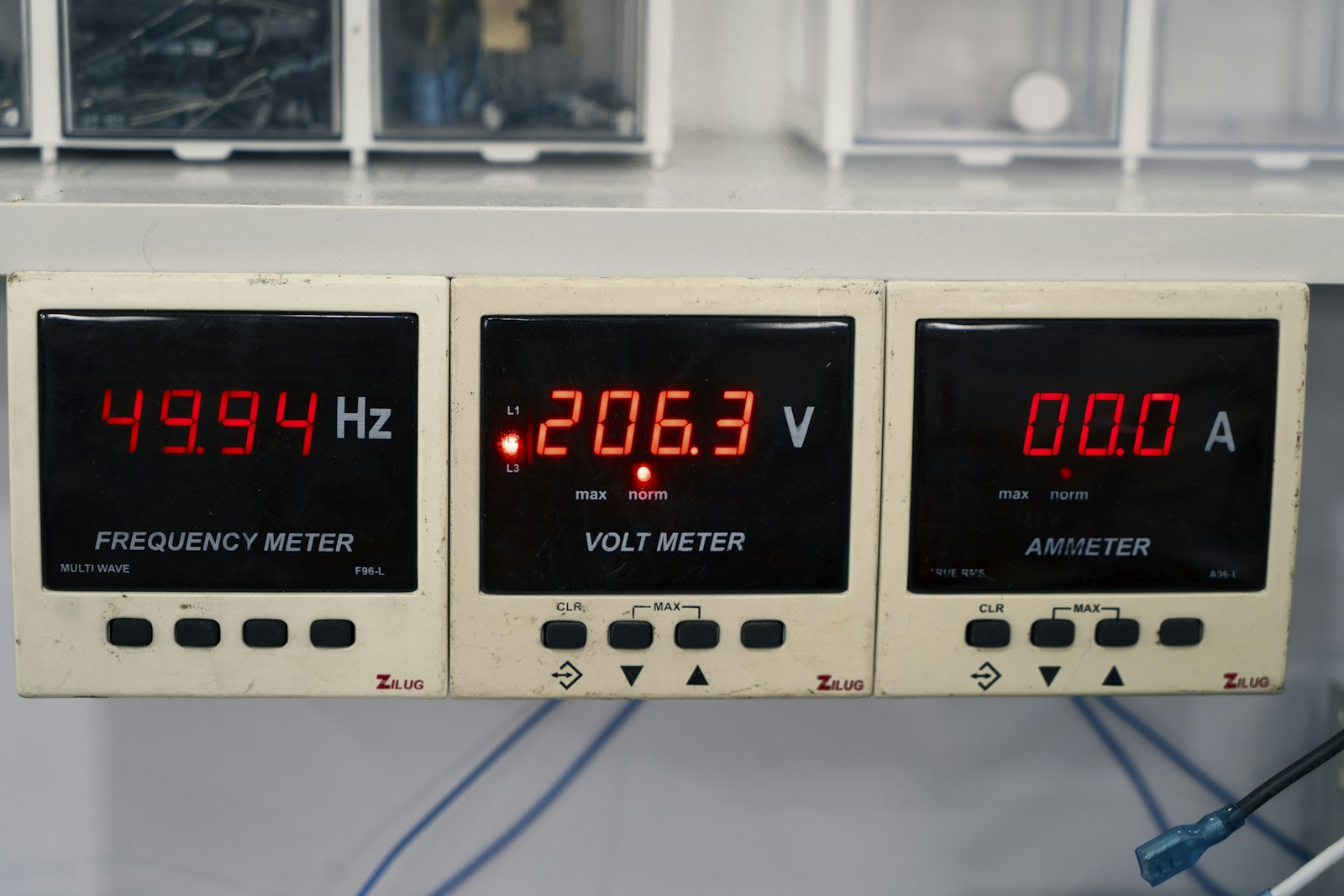
Facility services that prove the work was done, and that it worked.
For integrated facility management firms and service providers. Deliver Aqueduct across client portfolios: faults become tickets in the CMMS your teams already use, and every closure is verified at the meter.
Prove the work was done, and that it worked, at every client site you run.
Every client site on one platform, whatever BMS it runs
- Portfolio by client
Sites are grouped by client and contract, so each account manager sees only the buildings they answer for.
- Any existing system
Existing BMS, meters and sensors are connected as they are, or replaced where the client chooses that route.
- Ranked by waste
Client sites are ranked by intensity and cost, so crews start with the buildings that matter most.

Diagnosed faults arrive in the CMMS your crews already use
- Diagnosis attached
Each ticket carries the fault, the likely cause and the recommended fix, so the first visit is the right one.
- Your CMMS stays
Work routes into the CMMS your teams already run, with no new work order system to learn.
- Closure by equipment
The ticket closes when airflow, temperature or flow confirms the fix, not when a technician ticks a box.
Verified savings per site, per contract, per quarter
- Weather-normalized baselines
Each site is baselined against weather, so savings survive the question of whether it was just a mild season.
- Money, not kilowatts
Rate configuration from client bills turns the difference into money, ready for the quarterly business review.
- Monthly metrics export
Verified monthly metrics export per client, so reporting is a download instead of a week of spreadsheets.

Delivering facility services, before and after Aqueduct
- Crews arrive on site to diagnose a fault from scratch.
- Work orders close when the technician fills in the form.
- Savings claims in the QBR rest on engineering estimates.
- Comfort complaints drive the reactive call-out schedule.
- Every client site runs a different system and reports differently.
 The Aqueduct way
- Crews arrive with the diagnosis and the fix already attached.
- Work orders close when the equipment confirms the fix held.
- Savings in the QBR are verified at the meter.
- Zones are held in range, so reactive call-outs drop.
- Every client site reports the same way on one platform.
What facility services and fm firms teams are up against.
Water, energy, air and operations carry equal weight. Each one runs the same loop: monitor, measure, identify, act, verify.
Water: Loss found for the client, by you
Balance and leak findings per client site, priced, with the fix routed to your crew.
Energy: Savings you can put in the QBR
Weather-normalized baselines per site. Verified savings per contract.
Air: Comfort complaints, down
Zones held in range. Fewer reactive call-outs.
Operations: From fault to verified closure
Diagnosed faults with the recommended fix arrive in the CMMS. Closure is confirmed by the equipment, not the form.
Problem, solution, impact.
How Aqueduct resolves each problem for facility services and fm firms, and what changes when it does.
Balance and leak findings per client site, priced, with the fix routed to your crew.
A live water balance across meters and sub-meters localizes the loss, routes the fix and confirms it closed at the meter.
Loss found from the balance, not the bill, and every fix verified.
Weather-normalized baselines per site. Verified savings per contract.
Weather-normalized baselines per building and asset show the waste in money; schedules and setpoints adjust where control is enabled.
Savings stated in money and confirmed at the meter, not estimated.
Zones held in range. Fewer reactive call-outs.
Air quality per zone, overlaid with occupancy, with ventilation raised when it matters and verified back in range.
Targets held during occupied hours, with the energy cost counted.
Diagnosed faults with the recommended fix arrive in the CMMS. Closure is confirmed by the equipment, not the form.
Faults diagnosed in plain language and routed into your CMMS with the fix; early signs of failure schedule maintenance first.
Fewer reactive call-outs and closures confirmed by the equipment.
One incident, from first signal to verified fix.
An illustrative example of the flywheel on a typical site.
Client meters, BMS points and equipment across the portfolio.
A baseline per client, site and asset.
AHU-01 blower fan stopped. Diagnosed: failed rotor shaft.
Ticket 4493 routed into the CMMS with the fix and parts.
Airflow confirmed back. Closure verified. The client sees the proof.
Four connected products on one data layer.
A service contract should be judged on verified results, not on tickets closed.
Talk to our teamReplace what should be replaced. Connect the rest.
- Site-by-site BMS dashboards
- Manual meter reads
- Spreadsheet M&V
- CMMS
- CAFM and IWMS
- Client reporting tools
Three equal ways in: keep your BMS, replace it, or build Aqueduct in at design stage.
The questions each seat asks first.
“Can I show the client a verified number each quarter?”
“Does it create work my CMMS cannot track?”
“Can we deliver it as part of our contract?”
Where teams put it to work

Evidence for every renewal
Verified savings and fault closures per site give account managers the evidence that keeps a contract through renewal.
Learn more
The right fix on the first visit
Faults found, diagnosed and routed with parts and the recommended fix, so crews spend their time repairing rather than hunting.
Learn more
Early signs, scheduled work
Vibration, sound signature and energy drift on client plant schedule maintenance first, turning emergency call-outs into planned visits.
Learn moreYour clients want numbers your contract does not produce
Bids ask for evidence, not activity
Tenders now ask how energy and water performance will be measured and reported. A maintenance schedule answers a different question, and a competitor with a measurement answer wins on it.
Savings you cannot substantiate
An efficiency commitment needs a credible baseline and continuous measurement after. Without both, the claim is contestable in either direction and value delivered goes unrecognized at renewal.
Reactive work lands on you
On a fixed-price contract, emergency call-outs and early replacements are paid by the provider. Condition data is what moves work from reactive to planned.
The data exists, the insight does not
The client BMS holds years of points that nobody analyzes. The client has no one to do it and you were never asked. That gap will be filled by someone.
Multi-site clients want one view
A client with forty sites wants to know which are performing, normalized for weather and size. The provider in the buildings is the natural party to answer.
Building your own platform is a trap
A software program with a roadmap, a security surface and a support desk has nothing to do with winning FM contracts. Partnering gets you the capability without the burden.
From reactive to predictive, inside the contract you already run
Baseline every site
Aqueduct builds an expected-consumption baseline per site and asset by regression on usage and cooling and heating degree days. Upload 6 to 12 months of client bills and the baseline exists on day one, rather than after a season of data.
Catch drift before the fault
aQ PredictIQ watches run hours, power signatures, vibration and temperature against each asset's own normal. A chiller losing efficiency or a fan bearing heating up is flagged while it is still a planned job.
Diagnose and route to your CMMS
The finding arrives as a ticket in the CMMS your teams already use, with the likely cause, the asset, the location and the recommended fix. No second system for technicians to check.
Verify closure at the meter
When the ticket is closed, the equipment confirms it: airflow back, flow back to baseline, power signature normal. Closure is proven by the asset, not by the form.
Put the number in the QBR
Savings against the weather-normalized baseline, converted to money with the client's tariff, become the quarterly evidence that the contract is working.
Where an FM contract quietly loses margin
You do not choose your clients' buildings or their systems. These are the places reactive cost and unproven savings hide in a typical portfolio, and what the measurement layer does about each.
Chiller plant
Sequencing drift and setpoint creep raise kW per ton for months before a complaint arrives.
Chiller power, chilled water temperatures and flow, load and ambient.
Efficiency trended against the plant's own baseline, with drift raised as a planned ticket.
AHUs and fan coils
Failed belts, stuck dampers and loaded filters become comfort calls and emergency visits.
Fan power, supply and return temperature, filter differential pressure.
Faults diagnosed with the likely cause, routed to the right crew with parts.
Pumps and motors
Bearing wear and cavitation run unseen until the motor trips.
Power signature, vibration, run hours.
Condition trend per asset, so replacement is scheduled, not forced.
Domestic water and washrooms
Passing valves and failed flush valves run all night and show up only on the client bill.
Flow per block, overnight baseline.
aQ WaterGuard flags flow that should be near zero, priced, with the location.
Cooling towers
Make-up and blowdown unmetered, so water treatment drift is invisible.
Make-up, blowdown, cycles of concentration.
Tower water separated from building demand and trended per tower.
Electrical distribution
Peaks and power factor penalties land on the invoice after the fact.
Feeder load, power factor, peak demand.
Peaks visible while they build, tied to the asset that drove them.
The BMS itself
Overridden points, schedules left in hand and alarms muted years ago.
Point states and schedules read over BACnet or Modbus, read only.
Overrides and off-schedule running surfaced as findings, whichever vendor's BMS the client runs.
Pick how deep you want to go
Most partners start at referral or resell and move to embed once client demand is proven. There is no need to start at the deepest level.
| Model | Who holds the client contract | Who delivers | Best when |
|---|---|---|---|
| Referral | Milvian AI | Milvian AI | You want to test demand with no delivery risk |
| Resell | You | Milvian AI behind you | You already sell recurring services to the same buyer |
| Embed | You | Jointly, with Aqueduct written into your standard scope | Measurement is becoming part of every contract you bid |
| White label | You | Milvian AI behind your brand | Your brand is the product, with a volume commitment and a defined support model |
What your clients are being asked to prove
Every one of these regimes is moving from assessed to measured. The party already in the building is the natural one to help a client answer them. Orientation only, not legal advice.
MEES, ESOS and SECR
MEES is being tightened to EPC band B for larger commercial buildings by 2031, which makes an unimproved asset harder to let. ESOS asks for an action plan and progress against it. SECR asks for the actions to be disclosed in the annual report.
- Measured savings for the ESOS action plan
- Consumption and actions for SECR
- Evidence the asset actually improved
- Measured
- energy per site and system
- Who judges
- the assessor and the regulator
- Aqueduct
- aQ Assurance exports for the client to submit
Al Sa'fat and Demand Side Management
Al Sa'fat Silver is the mandatory baseline for new Dubai permits from 2026, and Dubai's DSM strategy targets a 30% cut in electricity and water demand by 2030. Cooling is most of the bill, so efficiency and cost sit on the same lever.
- Cooling plant efficiency against ambient
- Water by source and use
- Asset-level evidence in operation, not only at handover
- Measured
- chiller, AHU and water consumption
- Who judges
- the municipality and the client
- Aqueduct
- per-asset records over time
NABERS
NABERS rates buildings from one to six stars on measured operational performance, and for large offices the rating is publicly disclosed. A portfolio that cannot produce clean meter data cannot improve its rating.
- Complete, attributable meter data
- Base building separated from tenancy
- Trend toward the next half star
- Measured
- energy and water by meter
- Who judges
- the accredited assessor
- Aqueduct
- clean data for the assessor
BRSR Core and CCTS
Listed clients now need reasonable assurance on water and energy intensity, so an assurer traces every number to source. The Carbon Credit Trading Scheme is widening its reach across energy-intensive sectors.
- Intensity metrics traceable to the meter
- Site-level records, not year-end estimates
- Data ready for the assurer's questions
- Measured
- water and energy per site
- Who judges
- the independent assurer
- Aqueduct
- timestamped records and exports
Benchmarking and performance standards
A growing number of cities require annual energy and water benchmarking above a floor area threshold, and some now mandate improvement over time with penalties. Disclosure is turning into performance.
- Annual benchmarking from complete meter data
- Improvement shown against a normalized baseline
- Per-site evidence for a multi-city portfolio
- Measured
- whole-building and sub-metered use
- Who judges
- the city program
- Aqueduct
- aQ Assurance exports for the benchmarking submission
One contract first, then the portfolio
Pick a live client that is already asking performance questions. The first finding becomes your reference for every other account.
Choose the contract
A client site with a performance question on the table: an energy commitment, a disclosure deadline or a run of reactive call-outs. Your account lead and a Milvian AI engineer walk it together.
Survey and proposal
Existing BMS points, meters and gaps are mapped. The proposal goes to the client under your name, with retrofit sensors only where a measurement does not exist.
Deploy around client operations
Installation is scheduled out of hours where needed. Faults start flowing into your CMMS as diagnosed tickets as each system comes online.
Show the first verified number
Savings against the weather-normalized baseline, priced at the client tariff, and a list of closures verified at the meter.
Embed it in the scope
Measurement moves from a pilot to a standard line in your bids, and multi-site benchmarking opens the conversation that expands the contract.
Sources7 references cited on this page
- EMS vs BMS, key differences, MRI Software
- Government strengthens non-domestic MEES to EPC B for large buildings, Energy Advice Hub
- SECR reporting versus ESOS, CIM
- NABERS, National Australian Built Environment Rating System
- Al Sa'fat Dubai Green Building System, Dubai Municipality
- Dubai Demand Side Management Strategy, Dubai Supreme Council of Energy
- India Carbon Credit Trading Scheme guide, rSustain
Proven in live sites across sectors.
Anonymized results, verified at the meter.
sites in 21 countries run on Aqueduct.
and 9 clinics in one of India’s top hospital chains.
US airport running water intelligence on Aqueduct.
of commercial real estate under Aqueduct.
Features that matter here
Common questions
No. It integrates with your CMMS. Tickets go in with a recommended fix, and verified closure comes back.
Installation is delivered through partners. A facility services firm can be that partner.
Yes. System integrators, MEP firms and facility services can specify Aqueduct, install around it and deliver it to their clients.
No. Referral and resell carry no volume commitment. White label does, because it brings brand and support obligations that only make sense at scale. The usual start is one client site on a live contract.
Under resell, embed and white label, no. Account protection is written into the agreement and the client relationship is yours. Under referral the client contracts with Milvian AI by design.
It is the normal case. Aqueduct is hardware agnostic and reads BACnet, Modbus, MQTT, OPC UA, LoRaWAN, cellular and vendor APIs, alongside whatever BMS is installed. For a provider that inherits buildings, that is the deciding point.
The survey conversation and the proposal, not the software. Your people need to spot where measurement is worth proposing. Deployment, commissioning, platform operation and support stay with Milvian AI unless you want them.
Each site gets an expected baseline by regression on its own history and cooling and heating degree days, so weather and season are taken out. Savings are the measured gap to that baseline, priced at the client's tariff. The method and the data behind every number are visible to both sides.
Only where control is enabled, with owner approval. Every command is logged with who approved it and when. Many FM deployments start monitoring only and add control once the client is comfortable.
See Aqueduct on your own facility.
Bring a site, a utility bill or a question. We will show you where the loss is.