A leak detection system for buildings that finds the leak, prices it and proves the fix.
Aqueduct is a leak detection system for buildings that closes a live water balance: metered supply must equal metered use plus loss, so any unaccounted flow is the leak signal. It then localizes the loss to a floor, line or node, puts a monthly cost on it, routes a ticket to your CMMS and confirms at the meter that the flow stopped.
Find the leak from the balance, put a price on it, and prove the fix.
The balance shows water leaving that nobody can explain
- Night flow watched
Quiet hours give the cleanest signal, so flow that should be near zero stands out against its baseline.
- Slow leaks included
Running toilet banks, stuck fill valves and slab leaks appear as a steady unaccounted term, not a puddle.
- Sudden loss caught
A sharp rate of change on any line is flagged against that line's own expected hourly profile.
A floor, a riser and a cost per month
- Narrowed to the node
The loss sits where the balance stops closing, so crews start at one riser instead of the whole building.
- Priced from your bills
Rate configuration from your utility bills turns lost gallons into a monthly cost that finance recognizes.
- Ranked by impact
Leaks across a portfolio are ordered by cost, so the most expensive loss gets the first crew.
Tickets go to your CMMS, proof comes from the meter
- Evidence attached
Each ticket carries the line, the flow trace and a recommended fix, so the plumber arrives knowing where to look.
- Your CMMS works it
Aqueduct routes the ticket into the system you already use. Technicians and work orders stay there.
- Closed means stopped
After the repair, unaccounted flow must return to its baseline before the leak counts as fixed.
Leak detection, before and after Aqueduct
- The utility bill is the leak alarm, weeks after the loss.
- Puddle sensors catch bursts but miss slow, silent leaks.
- Crews walk every floor guessing where the water went.
- Lost water stays a volume nobody can put a price on.
- The ticket closes and nobody checks that the flow stopped.
 The Aqueduct way
- The live water balance is the leak alarm, refreshed every 60 seconds.
- Unaccounted flow against baseline catches slow leaks and sudden ones alike.
- Loss is narrowed to the riser, line or node.
- Rate configuration turns every lost gallon into a monthly cost.
- The meter confirms the flow stopped before the leak is closed.
What leaks look like without Aqueduct
Most facilities have one meter at the inlet and a monthly bill. That is not a leak detection system.
The bill is the alarm
Consumption doubles overnight and nobody knows until the invoice arrives weeks later. By then the water is gone and the cost is booked.
Spot sensors miss slow loss
Puddle sensors catch a burst under a sink. They do not see a running toilet bank, a stuck fill valve or a slab leak that never surfaces.
Nobody knows where to look
A high bill says the site lost water. It does not say which floor, riser or line. Teams walk the building and guess.
Fixes are never confirmed
A plumber closes the ticket. Whether the loss actually stopped is assumed, not measured.
How leak detection works in Aqueduct
Powered by aQ WaterGuard, built on the aQ Core data layer.
Meter the supply and the lines
Smart water meters at the main incomer and on sub-meters for floors, risers, RO feed, cooling and process lines. Existing meters connect where they emit telemetry. Installation is through partners.
Close the balance every interval
The water digital twin renders the balance as an equation: Main Supply equals All Floors plus Fire System plus RO Feed plus Unaccounted Loss. It updates every 60 seconds from telemetry.
Read the unaccounted term
Unaccounted loss is the unattributed flow. Aqueduct watches it against the expected baseline for that hour, plus night flow and rate of change, so slow leaks show up as well as sudden ones.
Localize and price it
The loss is narrowed to the block, line or node where the balance stops closing. Rate configuration from your bills turns the volume into a cost per month.
Route, then verify
A ticket goes to your CMMS with the location, the evidence and a recommended fix. After the repair, the balance confirms the unaccounted flow has returned to normal.
One leak, start to finish
An illustrative incident at a multi-floor building.
Flow meters on the main supply and each floor riser report into the water twin through the night.
The balance shows unaccounted flow holding above its expected night baseline while the building is unoccupied.
The gap sits between the supply header and the third-floor riser. Aqueduct flags a probable continuous leak on that line and prices it per month.
A ticket lands in the CMMS with the line, the flow trace and a recommendation to check fill valves and fixtures on that riser.
After the repair, unaccounted flow returns to its baseline and stays there. The reading becomes the new baseline.
Problem, solution, impact
Where leak detection pays back across outcomes.
Leaks discovered on the monthly bill, weeks late.
A live water balance with unaccounted loss tracked every interval.
Loss found in time to stop it, with every saving verified at the meter against a weather-normalized baseline.
Plumbers sent to walk the whole building.
Loss localized to the line or node, with the trace attached to the ticket.
Shorter search, a targeted repair and a closed loop in your CMMS.
Leaking hot water lines waste the energy that heated them.
Hot and cold distribution modeled separately where the site has both.
Hot water losses seen as both a water and an energy cost.

What you get
Leak detection that goes past the alert.
Live water balance
Supply equals use plus loss, per site, floor and line, on the water digital twin.
Unaccounted loss tracking
The leak signal, tracked against an expected baseline for every hour.
Location, not just volume
Loss narrowed to the block, riser or node where the balance stops closing.
Cost per month
Rate configuration from your utility bills turns lost gallons into money.
Tickets with evidence
Routed into your CMMS with the trace and a recommended fix. Your CMMS manages the work.
Verified at the meter
The balance confirms the loss stopped. Every verified result becomes the new baseline.
Where it fits
- Water management systems
- Spot leak alarms used as the only signal
- CMMS
- EAM
- AMI
- Historians
We don't sell hardware as our core business. Meters and sensors are specified or reused, and installation is through partners.
Related standards and programs
Aqueduct supplies the metered data. Check the current rule for your site.
Where teams put it to work

Thousands of meter points, one balance
Terminals, concourses and tenants read as one live water balance, so a loss gets an address instead of waiting for the bill. Every saving is verified at the meter against a weather-normalized baseline.
Learn more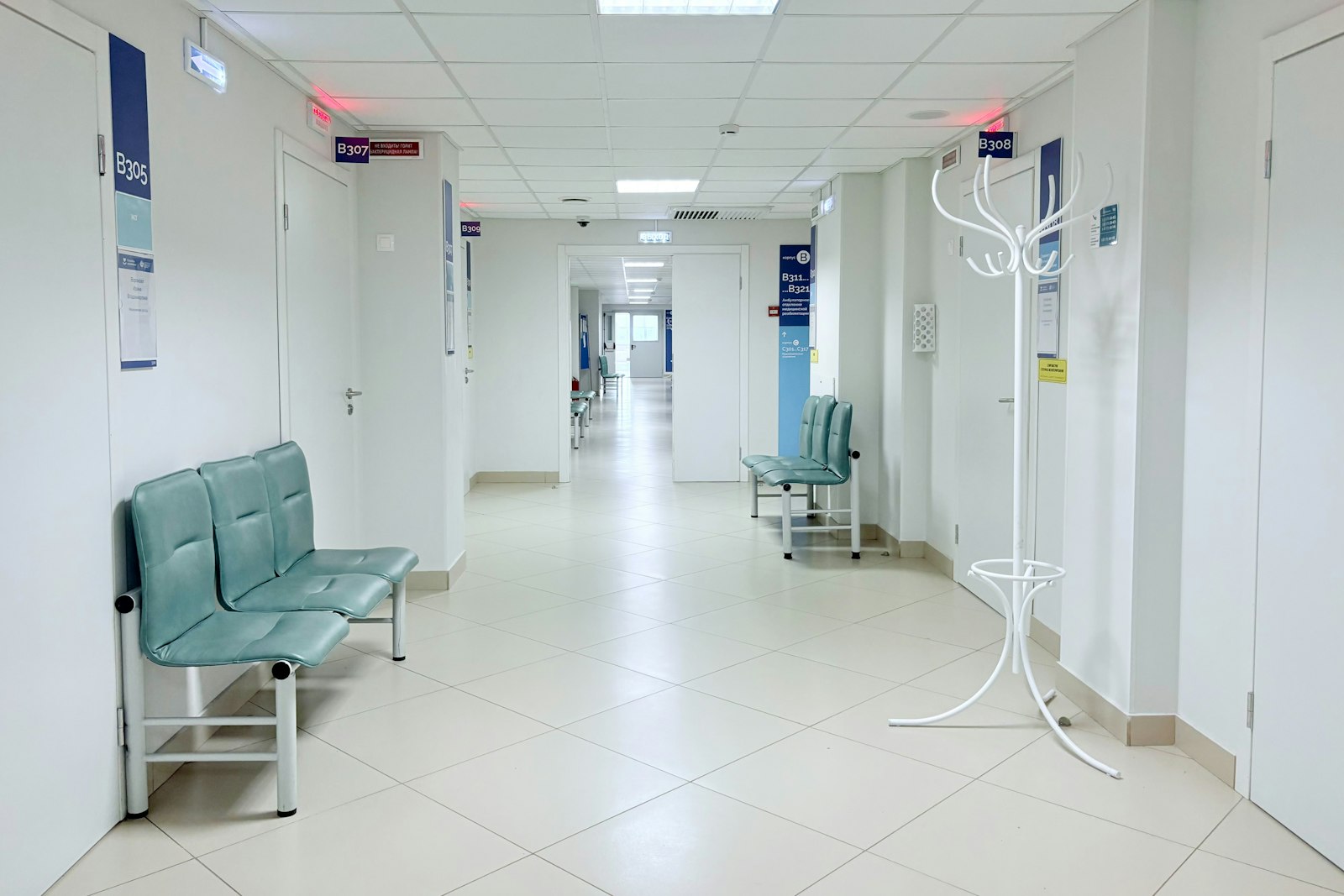
Leaks found before they reach a ward
Risers, sterile processing and plant room lines are sub-metered, so a continuous leak is located and routed before it turns into water damage in a clinical area.
Learn more
Floor by floor water accountability
Each floor's cold and hot water lines reconcile to the main supply, so a stuck fill valve on one floor shows up the same night instead of next month.
Learn moreRelated
Common questions
A spot sensor detects water where it is placed. Aqueduct detects loss anywhere in the metered system by closing the water balance, so slow and hidden leaks show up as unaccounted flow.
You need a metered main supply and enough sub-metering to localize loss. Existing meters connect if they emit telemetry. Where more are needed, installation is through partners.
Each line has an expected baseline by hour. Flow that persists when the site is unoccupied, or that does not reconcile to any metered use, is flagged as probable loss.
It routes a ticket to your CMMS with the location, evidence and a recommended fix. Your team or contractor repairs it, and Aqueduct verifies at the meter that the loss stopped.
Only where a controllable valve is connected and control is enabled, and only with owner approval. Every command is logged.
See Aqueduct on your own facility.
Bring a site, a utility bill or a question. We will show you where the loss is.