
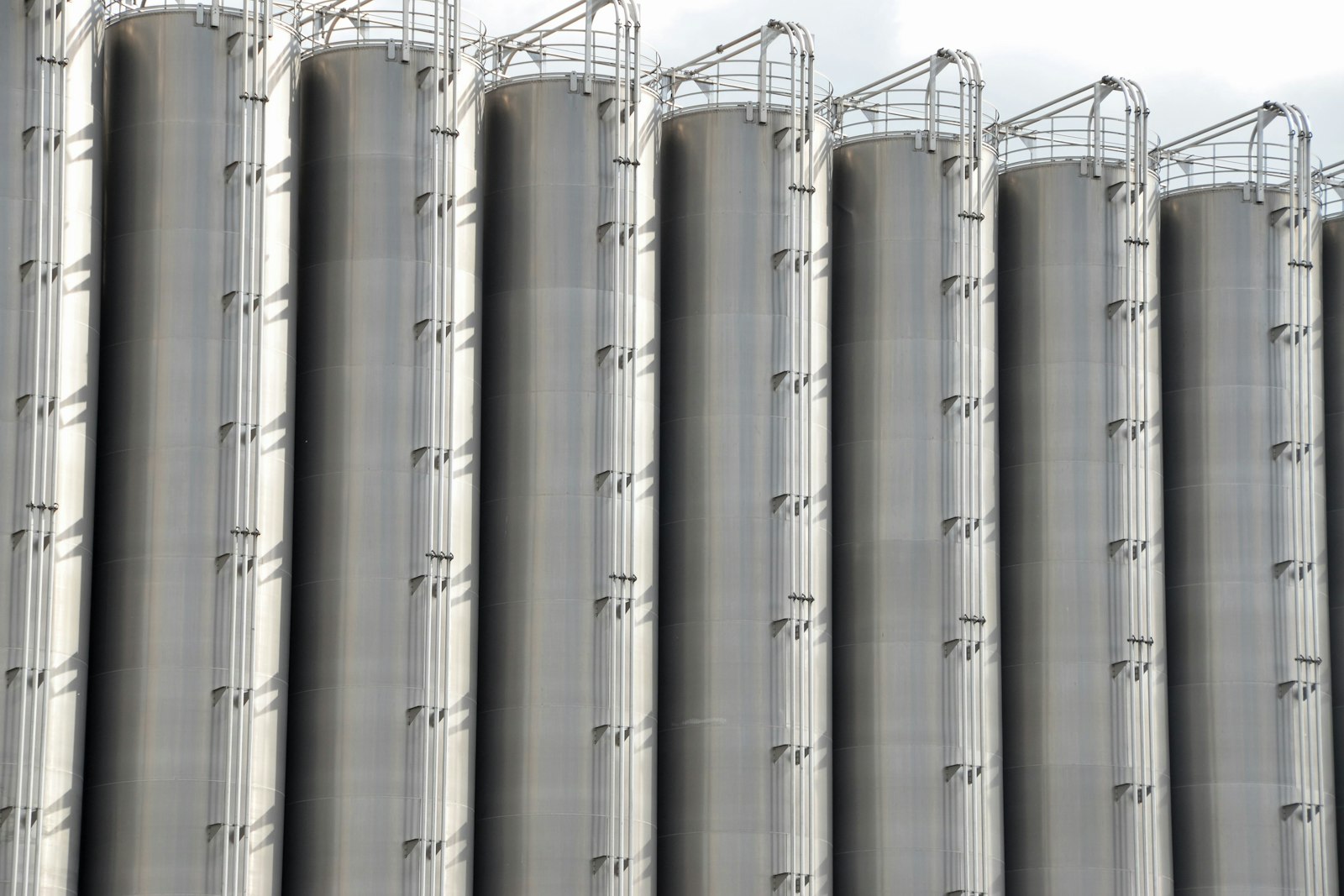
Distilleries where every liter in is accounted for on the way out.
Mashing, distillation, condensing and cleaning make distilling one of the most water and steam intensive processes in food and drink. Aqueduct meters every flow, closes the water and thermal balances, and turns spent wash into a measured stream.
What distilleries and breweries teams are up against.
Water, energy, air and operations carry equal weight. Each one runs the same loop: monitor, measure, identify, act, verify.
Water: A ZLD balance that closes
Intake, process, cooling, cleaning and reuse reconciled continuously, so zero liquid discharge is shown, not claimed.
Energy: Steam as the process, not overhead
Fuel, steam, condensate return and blowdown in one thermal balance.
Air: Conditions where people work
Temperature, humidity, CO2 and VOC logged per zone without a manual sheet.
Operations: Effluent you can attribute
Every spike traced to the batch, wash or dump that caused it.
Problem, solution, impact.
How Aqueduct resolves each problem for distilleries and breweries, and what changes when it does.
Intake, process, cooling, cleaning and reuse reconciled continuously, so zero liquid discharge is shown, not claimed.
A live water balance across meters and sub-meters localizes the loss, routes the fix and confirms it closed at the meter.
Loss found from the balance, not the bill, and every fix verified.
Fuel, steam, condensate return and blowdown in one thermal balance.
Weather-normalized baselines per building and asset show the waste in money; schedules and setpoints adjust where control is enabled.
Savings stated in money and confirmed at the meter, not estimated.
Temperature, humidity, CO2 and VOC logged per zone without a manual sheet.
Air quality per zone, overlaid with occupancy, with ventilation raised when it matters and verified back in range.
Targets held during occupied hours, with the energy cost counted.
Every spike traced to the batch, wash or dump that caused it.
Faults diagnosed in plain language and routed into your CMMS with the fix; early signs of failure schedule maintenance first.
Fewer reactive call-outs and closures confirmed by the equipment.
One incident, from first signal to verified fix.
An illustrative example of the flywheel on a typical site.
Intake, condenser cooling, CIP, boiler and effluent meters, per line.
Batch-aware baselines, each batch judged against the last comparable one.
Cleaning circuit on still 2 using more water than its last comparable batch.
Ticket routed with the cause: a valve not seating.
Cycle back to baseline. The ZLD balance closes again.
Four connected products on one data layer.
Replace what should be replaced. Connect the rest.
- Boundary meters and monthly bills
- Manual effluent log sheets
- Spreadsheet water balances
- CMMS
- Plant SCADA and historians, read only
- ERP for cost allocation
Three equal ways in: keep your BMS, replace it, or build Aqueduct in at design stage.
The questions each seat asks first.
“Where is the water and steam going, batch by batch?”
“Can I show the board the ZLD balance closes?”
“Is the condensate coming back?”
Water and steam are the process here, not overhead
In most plants water and steam are support services. In a distillery they are part of the product. That puts a floor under efficiency work, and it is why measurement matters more, not less.
Process water
Metered only at the boundary, so mashing, dilution and make-up disappear into one number.
Intake by source, flow per process line, tank levels.
aQ WaterGuard reconciles supply against process, cooling, cleaning, RO feed and loss.
Condenser cooling
Once-through operation or poor tower cycles. A large draw that appears only in the total.
Cooling flow, delta T, tower make-up and blowdown.
Condenser water separated from process water, with the recirculation and heat recovery opportunity quantified.
Steam and boiler fuel
Failed traps, condensate not returned, blowdown left unmanaged.
Fuel, steam flow, condensate return ratio, feedwater make-up, blowdown.
aQ EnergySmart closes the thermal loop and makes condensate return the headline number.
Cleaning and CIP
Vessel, line and tank cleaning between batches run to fixed recipes and timers.
Flow and conductivity per circuit, volume and duration per cycle.
Each cleaning cycle compared with the last comparable one on the same circuit.
Spent wash and effluent
A very strong organic load, shock loads with no attributable cause, and a ZLD balance that does not close.
Spent wash volume by destination, treated effluent, reuse, load profile.
aQ Core ties each spike to the batch or wash that caused it and keeps the ZLD balance current.
RO and water treatment
Reject sent to drain, membranes fouling slowly.
Feed, permeate and reject flow, recovery rate, differential pressure.
Recovery tracked per train, reject counted as a recoverable stream.
Electricity
Power factor penalties and demand peaks found on the invoice.
Feeder load, power factor, peak demand.
Peaks seen as they build and tied to pumps, agitators, compressors or packaging.
Compressed air
Leaks at valves, actuators and packaging lines that run between batches and overnight.
Compressor kW, flow, pressure, off-shift demand.
Off-shift demand trended as the leak signature, per ring main.
Where a distillery's utilities leak
of steam leaving the boiler can be lost through failed traps without a maintenance program
Source: Best practices: steam and condensate leaks, Plant Engineeringof generated compressed air is typically lost to leaks
Source: Compressed air system leaks fact sheet, Compressed Air Challengetypical RO recovery, so a quarter to a half of feed leaves as reject
Source: Boiler feedwater and reverse osmosis for modern steam systems, Kurita Americaoutlet BOD limit for inland surface discharge under CPCB general standards
Source: CPCB effluent discharge standards, compliance guide, SpansFrom grain to spent wash
Each stage of distilling uses water and heat differently, and each hides a different loss.
Mashing and cooking
Grain or molasses is mixed with hot water and cooked. Water volume and steam both set yield and cost, and both are usually read from a recipe rather than a meter.
- Water per batch against recipe
- Steam per batch against throughput
- Batch-to-batch variance visible
- Measured
- water flow, steam flow, temperature
- Target
- your recipe per batch
- Aqueduct
- baselines each batch against comparable batches
Fermentation and cooling
Fermentation releases heat that has to be removed to protect yield. Cooling water and chilled water run for long periods, often without separate metering.
- Cooling water per vessel
- Chilled water temperature and flow
- Fermenter temperature profile
- Measured
- flow, temperatures, chiller power
- Target
- your fermentation profile
- Aqueduct
- separates fermentation cooling from the rest of the site
Distillation columns and stills
Distillation is a thermal separation, so steam is the mechanism, not overhead. Trap failures and poor condensate return hit fuel, make-up water and chemicals together.
- Steam per liter of spirit
- Condensate return ratio
- Trap health inferred from make-up
- Measured
- steam flow, condensate, fuel
- Target
- steam per liter set by the plant
- Aqueduct
- closes the thermal balance per still
Condensers and cooling towers
Condensing spirit vapor takes a large volume of cooling water. Where it is once-through, or a tower runs at low cycles of concentration, it is one of the biggest draws on site.
- Cooling flow and delta T
- Tower make-up and blowdown
- Heat recovery opportunity sized
- Measured
- flow, temperatures, conductivity
- Target
- cycles of concentration you set
- Aqueduct
- quantifies recirculation and recovery
Cleaning between batches
Vessels, lines and tanks are cleaned between batches to fixed recipes and timers, exactly as in a dairy. It is the largest controllable water volume on site.
- Liters and minutes per cycle
- Unused vessels cleaned anyway
- Final rinse recovery measured
- Measured
- flow, conductivity, duration
- Target
- your validated cleaning recipe
- Aqueduct
- compares each cycle with its last comparable cycle
Spent wash, evaporation and ZLD
Spent wash carries an organic load far above ordinary food effluent, which is why distilleries are singled out for zero liquid discharge in India. Evaporation and incineration add their own steam load.
- Spent wash by destination
- Evaporator steam and condensate
- Treated volume reused, measured
- Measured
- volumes, flows, steam to evaporators
- Target
- your ZLD condition
- Aqueduct
- the measured balance; the board judges compliance
How a ZLD balance is closed and kept closed
Meter every entry point
Every source of water entering the site is metered: borewell, municipal, tanker and recovered streams. If an input is estimated, the balance cannot close.
Meter every exit and sink
Product, evaporation, reuse, solid residue and any discharge are measured or derived from measured flows. Each one has a line in the equation.
Reconcile continuously
aQ WaterGuard reconciles supply against destinations all day. The residual is the unaccounted term, and when it grows, someone is told.
Attribute every event
When spent wash or effluent spikes, aQ Core ties it to the batch, wash or dump that caused it, so heavy discharges can be staggered.
Export the evidence
aQ Assurance exports timestamped records for pollution board returns and BRSR. The board and the assurer decide; Aqueduct supplies the measured record.
Water savings that do not touch the spirit
There is a floor below which you cannot go without affecting the product. These opportunities sit above it, and measurement is what proves each one.
| Opportunity | What measurement shows | Touches validated cleaning? | Who signs off |
|---|---|---|---|
| Recover final rinse as next pre-rinse | Final rinse volume and quality per cycle | No | Utilities engineer |
| Skip cleaning on unused vessels | Vessels cleaned with no batch since last clean | No | Production manager |
| Fix passing valves | Flow on circuits that should be idle | No | Maintenance |
| Raise cooling tower cycles | Make-up, blowdown and conductivity trend | No | Utilities engineer and water treatment vendor |
| Recover condensate | Condensate return ratio per area | No | Utilities engineer |
| Shorten a cleaning step | Endpoint reached consistently early across many cycles | Yes | Quality, through your change process |
One line first, proved in a quarter
Pick one self-contained line with a complete water and thermal story. Measure it against your own bills before going further.
Survey
Water intakes, process and cooling circuits, CIP, boiler house, condensate return, spent wash handling and the effluent plant. Twelve months of bills.
Instrumentation plan
Sensor list, gateway layout and the water and thermal balance model, signed off by your team.
Phased metering
Clamp-on flow, pressure, level and power sensors fitted during normal running. Line breaks wait for a planned shutdown.
Live and reconciled
Balances close, effluent events are attributable and the first losses are named against the baseline.
Go deeper on the systems behind it
Water reuse, STP and RO
How reuse streams are measured so the figure survives an assurance question.
Learn moreESG and sustainability reporting
Timestamped records for BRSR, pollution board returns and internal targets.
Learn moreSources5 references cited on this page
- CPCB effluent discharge standards, compliance guide, Spans
- Best practices: steam and condensate leaks, Plant Engineering
- Compressed air system leaks fact sheet, Compressed Air Challenge
- Boiler feedwater and reverse osmosis for modern steam systems, Kurita America
- India Carbon Credit Trading Scheme guide, rSustain
Proven in live sites across sectors.
Anonymized results, verified at the meter.
sites in 21 countries run on Aqueduct.
and 9 clinics in one of India’s top hospital chains.
US airport running water intelligence on Aqueduct.
of commercial real estate under Aqueduct.
Features that matter here
Common questions
In India, ZLD is required under CPCB and state pollution control board orders for distilleries above defined production volumes. Elsewhere it is not a blanket rule, but ZLD-style conditions appear in individual consents, especially where water is scarce.
ZLD is a balance statement: every liter in must be accounted for as product, evaporation, reuse or solid residue. Aqueduct meters the flows so that balance can be stated and defended continuously. The pollution board decides whether the site complies.
Start with steps that do not touch validated cleaning: recover final rinse as pre-rinse, stop cycles on vessels that were not used, fix passing valves. Recipe changes follow measured evidence and your own quality process.
Threshold alarms would. Aqueduct reconciles a balance and raises the residual, and compares each batch with a comparable previous batch rather than a rolling average.
No. Clamp-on flow meters, current transformers and surface temperature sensors fit while lines run. Existing meters and PLCs are read over Modbus, BACnet or OPC UA. Anything needing a line break waits for a planned shutdown.
No. Aqueduct reads plant data alongside SCADA and historians. Process control stays where it is.
Because every kilogram of condensate not returned is paid for three times: in fuel to heat fresh water, in treated make-up water and in the chemicals to treat it. It is the single strongest signal of steam system health on site.
Yes. Brewing shares the same pattern: hot liquor, wort boiling, fermentation cooling, heavy cleaning between batches and a strong effluent. The same balances and batch-aware baselines apply.
CCTS is widening across energy-intensive sectors and builds on measured energy data. Metered fuel, steam and electricity per line give you the starting point for any obligation or credit, before anyone asks for it.
Only if they are measured. Aqueduct meters condensate, blowdown, RO reject and treated effluent stream by stream, so each reuse figure traces back to a meter rather than a design assumption.
The one with one supply, one discharge and one energy feed you can reconcile, plus a heavy cleaning and thermal load. A clean first balance makes the case for the next line.
See Aqueduct on your own facility.
Bring a site, a utility bill or a question. We will show you where the loss is.