What the ideal airport management system looks like for terminals, utilities and tenants
 Milvian AI teamFacilities and infrastructure intelligence
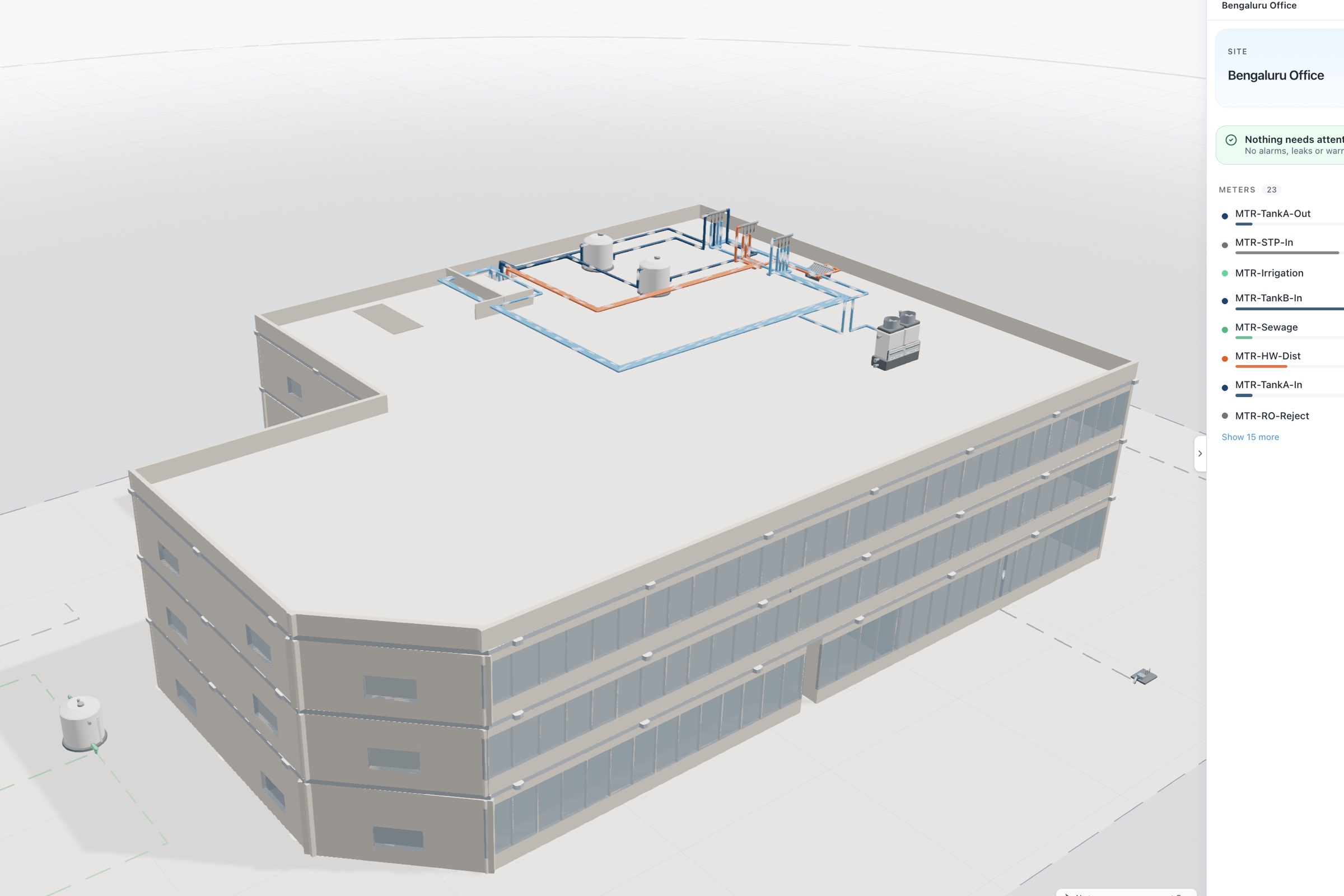
On the facility side, the ideal airport management system holds one live model of terminals, support buildings and utility networks. It balances water from supply to use, bills tenants from meters, baselines energy against weather and flight activity, predicts failures in critical equipment and acts on HVAC and ventilation only where control is enabled, with owner approval, with every command logged.
Which airport management system this guide is about
Airport management system usually means software for flights, gates, stands and resources. Those systems run the airfield and the passenger journey. This guide is about the other half: the system that runs the buildings and utility networks underneath, from terminal HVAC to buried water mains to the meters that bill every tenant.
That half is usually fragmented. Each terminal has its own BMS from the contractor who built it. SCADA runs pumps, substations and treatment. A CMMS handles work orders across thousands of assets. Tenant utilities are billed from manual reads or estimates. When something goes wrong, such as water use doubling overnight, the first sign is often the bill.
The ideal system turns those parts into one operating view of the airport's built estate. It does not replace flight systems, the BMS or SCADA. It reads them, models the estate and tells the facility team what to change.
Scale is what makes it hard. A large airport can have thousands of meters and sensors, dozens of buildings and miles of pipe, run by several departments and a long list of contractors. The ideal system has to make that estate legible to a small team: a site map with status for every building, a portfolio view that ranks them, a digital twin for each network and plant, and analytics that explain what changed and why.
What the ideal airport management system must do
| Capability | Why it matters in an airport | Question to ask a vendor |
|---|---|---|
| One model of the built estate | Terminals, hangars, cargo, parking and networks must be seen together | Show me every building and network zone with meters and sensors placed |
| Live water balance | Buried mains lose water where nobody looks | How do you balance supply against metered use and show unaccounted loss |
| Tenant metering and billing | Airlines and concessions consume utilities the airport pays for | Can you bill each tenant from dedicated and shared meters |
| Baselines that follow activity | Flight schedules and seasons change demand | How do weather and activity enter your baselines |
| Critical equipment health | Baggage, jet bridges and plant failures disrupt operations | How do you detect drift early and route it to our CMMS |
| Passenger area air quality | Holdrooms and security halls fill in waves | How do you track CO2 and occupancy by zone |
| Governed control | Nothing may disrupt operations | What approval, lockouts and command history come with control |
| Security by design | Airport networks carry strict requirements | What is your network design and access model |
A day in the ideal system
- OvernightMinimum night flow across the water network is compared with its baseline. A rise in one zone becomes a ticket with the location and the volume lost.
- First wave of departuresHoldroom and security hall air quality follows the crowd, and ventilation responds where control is enabled, with owner approval.
- Midday peakPlant and feeder demand are tracked against limits, and power factor and losses are visible by feeder.
- AfternoonEquipment health alerts for a jet bridge or baggage drive arrive in the CMMS before failure.
- Month endTenant bills are generated from meters, anomalies are flagged per tenant and invoices from suppliers are checked against metered use.
The categories of tools airports compare
- Terminal BMSReliable HVAC control per terminal. Fragmented across contractors, little metering or network view.
- Utility SCADAReal-time control of pumps, substations and treatment. Not built for building analytics or billing.
- CMMS and EAMSystem of record for assets and work orders. Depends on someone reporting a problem.
- Tenant billing servicesProduce invoices, often from manual reads or estimates.
- Facility intelligence platformsOne data layer across BMS, SCADA, meters and sensors, with water balance, tenant billing, baselines, predictive alerts and governed control.
How to judge an airport facility management system
- Start with waterAsk the vendor to build a water balance from your supply and sub-meter data and show the unaccounted loss.
- Check tenant recoveryCompare what the airport pays for utilities with what it recovers, and ask how the system would close the gap.
- Review security earlyBring airport IT and security in before any pilot, and start read-only.
- Pilot one terminal and one network zoneAgree baselines and targets in advance, then measure.
Scorecard for an airport facility management system
| Criterion | Weight | What good looks like |
|---|---|---|
| Estate model and integration | High | Every BMS and SCADA source read into one model |
| Water balance and leak detection | High | Supply balanced against use, loss located by zone |
| Tenant billing | High | Dedicated and shared meters, tenant views, anomaly flags |
| Equipment health | Medium | Early warnings routed to the CMMS |
| Energy baselines and demand | Medium | Weather and activity normalized, feeder-level demand |
| Security and governance | High | Read-only first, approval, lockouts and command history |
Integration and data
The ideal system reads terminal BMS over BACnet or Modbus and takes SCADA data through its historian or a gateway. LoRaWAN meters extend coverage across car parks, cargo areas and long utility runs without trenching, and vibration and acoustic sensors add early warning on rotating equipment. The CMMS stays the system of record and receives findings with evidence.
Phasing keeps risk low: metering and water balance first, tenant billing next, baselines and fault detection on terminal plant after that, and control last, starting with low-risk spaces such as offices and car parks.
Data health deserves its own line in the contract. With thousands of devices, some will stop reporting every week. The ideal system shows each device's connection rate and battery or supply status, and places it on the floor plan, so the team replaces the right sensor and knows which readings to trust.
Reporting and compliance an airport faces
- Carbon accreditationMany airports participate in Airport Carbon Accreditation from Airports Council International, which needs measured energy and emissions.
- Water auditsAirports running their own networks can follow the AWWA M36 water audit method, which relies on metered supply and use.
- Buildings and energyTerminals may fall under benchmarking, building performance standards, LEED or ISO 50001.
- Indoor airASHRAE 62.1 sets ventilation expectations for occupied passenger and staff areas.
Where Aqueduct fits
Aqueduct is built to be that facility operating view. aQ Core models terminals, support buildings and network zones. aQ WaterGuard shows the live water balance and unaccounted loss, aQ EnergySmart provides the electrical digital twin and weather-normalized baselines with feeder-level demand and power factor, and aQ AirSafe follows passenger areas with CO2 and occupancy. Billing Management bills airline and concession tenants from their meters and validates supplier invoices.
Smart Controls acts through Modbus and BACnet field devices or LoRaWAN relays, where control is enabled, with owner approval, with lockouts and a command history that auditors and IT can inspect. Aqueduct serves a top 25 US airport.