The best water management system for airports, terminal by terminal
 Milvian AI teamFacilities and infrastructure intelligence
The best water management system for airports closes a live water balance per terminal, locates leaks in risers, restrooms and underground mains, meters cooling towers and irrigation, bills concessions from measured use, normalizes for passenger activity and weather, reads the existing BMS across terminals of different ages and installs during night access windows without disrupting operations.
Why airports are a hard case for water management
An airport is a city that never sleeps. Terminals built in different decades sit side by side, each with its own plumbing, risers and BMS. High-traffic restrooms run fixtures thousands of times a day, and a failed flush valve can run for days unnoticed in the noise. Central utility plants feed cooling towers that cycle large volumes. Concessions, airline lounges and kitchens draw water that is usually estimated from floor area.
Outside the terminal there are underground mains, irrigation on fixed timers, aircraft and vehicle wash facilities and, at some airports, on-site treatment and reuse. Underground leaks can run for months before anyone sees water at the surface.
Access is the final constraint. Work airside or in busy concourses happens in short night windows with security escorts, so anything that needs pipe cutting or long shutdowns is hard to deliver.
Airports also carry a commercial problem. Concessions, lounges and airline facilities are often charged for water by floor area, so a busy restaurant and a quiet retail unit pay similar shares. The airport absorbs the difference. Many airport operators are also under pressure from their communities and regulators to show measured progress on water, and a single campus total from the utility cannot show which terminal, system or tenant changed. The best water management system has to serve engineering, commercial and sustainability teams from the same numbers.
What the best water management system for airports must do
| Requirement | Why it matters in airports | Question to ask a vendor |
|---|---|---|
| Water balance per terminal | Without a balance, losses cannot be located. | Can you reconcile supply with metered uses for each terminal? |
| Riser and restroom visibility | High-traffic fixtures fail often and quietly. | Can you meter risers and restroom blocks and flag abnormal patterns? |
| Underground main monitoring | Buried leaks run for months. | How do you detect loss between the boundary and the terminals? |
| Activity normalization | Passenger numbers swing by day and season. | Can you normalize for passenger activity as well as weather? |
| Concession and tenant billing | Area-based charges leave the airport paying the difference. | Can you bill concessions and airlines from measured use? |
| Cooling tower and plant water | Central plant towers are a large, steady use. | Do you meter make-up and blowdown? |
| Mixed BMS estate | Terminals carry different vendors and eras. | Which systems do you read, and is it read-only by default? |
| Night window installation | Airside access is short and escorted. | Can you install clamp-on and wireless devices in night windows? |
The categories airport teams compare
- Traditional BMSRuns terminal plant and some pumps. Rarely closes a water balance or bills tenants.
- Utility SCADAMonitors pumping stations and reservoirs well. Usually stops at the terminal boundary.
- Standalone water dashboardsTrend meter data. Often cannot normalize for passengers or locate losses.
- Acoustic leak surveysSpecialist crews find buried leaks on survey days. Between surveys, new leaks run unseen.
- Utility bill servicesManage many accounts and invoices. Monthly, late and without location.
- Facility intelligence platformsTerminal balances, tenant billing and alerts across old and new buildings on one model, beside energy and air.
How to evaluate a water management system for an airport
- Read what already existsList existing meters, BMS points and any historian across terminals. Many airports have points that nobody reconciles.
- Pick one terminalChoose a terminal with known complaints or high bills, and pull 12 months of bills and passenger data.
- Close the balanceAdd clamp-on meters on risers, restroom blocks and tower lines during night windows until supply reconciles with use.
- Judge the findingsLosses should come with a location, a volume and a cost. Compare vendors on that, not on dashboards.
- Extend and billAdd further terminals, cargo and landside on the same model, then move concessions to measured billing.
Evaluation scorecard for airport water management
| Criterion | Weight | What good looks like |
|---|---|---|
| Terminal water balance | High | Supply reconciled with metered use, loss located |
| Leak and fixture alerts | High | Risers and restroom blocks flagged with a location |
| Activity normalization | High | Baselines reflect passengers and weather |
| Tenant billing | Medium | Concessions and airlines billed from measured use |
| Integration | Medium | Reads mixed BMS vendors and existing meters |
| Installation | Medium | Clamp-on and wireless, fitted in night windows |
| Cooling towers | Medium | Make-up, blowdown and cycles measured |
| Reporting | Low | Measured water figures per terminal for sustainability reports |
Integration and data across terminals
Keep the BMS in each terminal and read them side by side over BACnet, Modbus and vendor interfaces. Add clamp-on ultrasonic flow meters on mains, risers and restroom blocks, and LoRaWAN devices that reach through concrete without new cable routes airside.
Alerts route to the operations center by location and severity, and findings go into the CMMS as work orders. Concession billing exports to the airport's commercial and finance systems.
Ask how the system connects to flight activity. A schedule feed or daily passenger count lets baselines reflect how busy each terminal was, which makes restroom and kitchen water comparable from one day to the next. Ask too how device health is shown, because a meter that drops out during a busy bank of flights can make a loss look like a saving.
Compliance and reporting for airports
Airports report water through annual sustainability reports, investor disclosures and certifications such as LEED for new terminals. AWWA M36 gives a structure for water audits and loss accounting across the airport's own network. Airport Carbon Accreditation focuses on carbon, but the energy used to pump, heat and treat water feeds into it.
The water system supplies measured, traceable figures. The airport's sustainability team, auditors and accreditation bodies make the judgments.
Where Aqueduct fits
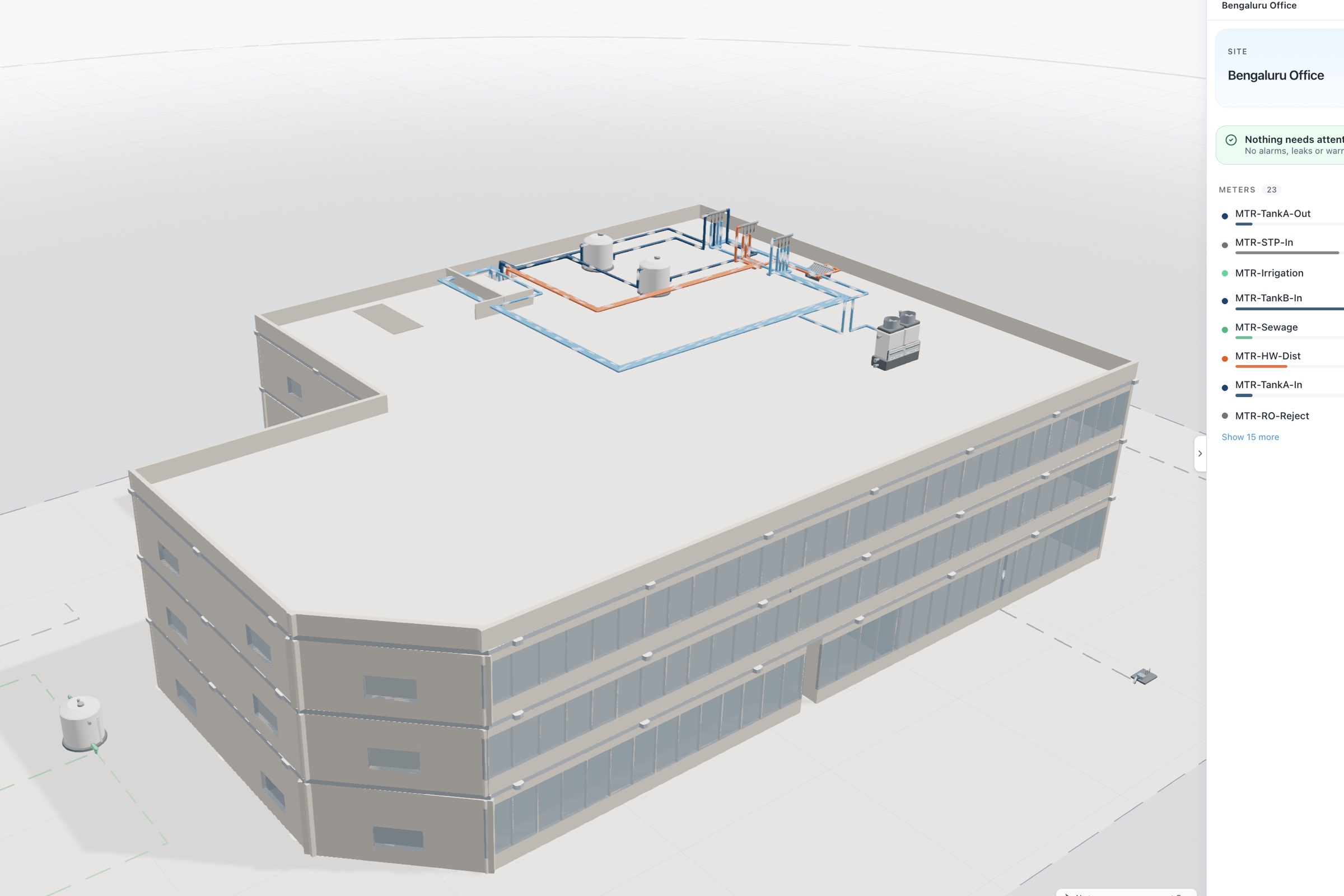
Aqueduct serves a top 25 US airport. aQ Core maps each terminal as sites, floors, zones and devices. aQ WaterGuard builds a live water digital twin per terminal with a water balance equation, main supply against each floor or concourse, the fire system and other metered uses, with unaccounted loss as its own term, updated from telemetry. Baselines come from regression on use and degree days, with day-one results from uploaded bills, and rate configuration prices every loss.
Billing Management bills concessions and airlines from measured use. Airports keep their BMS, replace failed meters or build measurement into new terminals. Where control is enabled, with owner approval, Smart Controls can act on approved valves and irrigation through field devices or LoRaWAN relays, with command history for every action.
A first engagement usually reads what already exists across one terminal, closes its water balance with clamp-on meters fitted in night windows, and names the first losses by location and cost. Concession billing and further terminals follow on the same model, so every building is compared on the same terms.