Choosing the best energy management system for hospitals
 Milvian AI teamFacilities and infrastructure intelligence

The best energy management system for hospitals meters each major system (air handling, chilled water, steam, hot water and clinical loads), baselines them against weather, finds faults such as simultaneous heating and cooling, routes them to the CMMS, keeps clinical spaces out of any automation unless engineering and infection prevention approve, and verifies every saving at the meter.
Why hospitals are a hard case for energy management
A hospital never closes, and much of it cannot be set back like an office. Operating rooms, isolation rooms, sterile processing and pharmacies have ventilation, pressure, temperature and humidity requirements set by codes such as ASHRAE/ASHE Standard 170. Air handlers run long hours at high outdoor air rates, and reheat adds a second layer of energy on top.
Behind the air sits a central plant of chillers, towers, boilers and often steam for sterilization, humidification and kitchens. Domestic hot water loops run hot for water safety and lose heat around the clock. Then comes the long tail: imaging standby loads, laboratory exhaust, data rooms, laundry, parking structures and generator testing.
The result is a high, flat profile where waste hides easily. And the stakes are different. An energy system that suggests the wrong setback in the wrong room is not a saving, it is a risk.
What the best energy management system for hospitals must do
| Requirement | Why it matters in hospitals | Question to ask a vendor |
|---|---|---|
| System level metering | Air, chilled water, steam, hot water and clinical loads each hide different waste. | Can you baseline each major system, not just the site total? |
| Weather-normalized baselines | A mild winter flatters a hospital that did nothing. | Do you regress on cooling and heating degree days for our location? |
| Fault detection with causes | Leaking valves, stuck dampers and simultaneous heating and cooling waste energy quietly. | Does each fault come with a likely cause and the data behind it? |
| CMMS routing | Engineering already runs work orders in a CMMS. | Do findings become tickets in our CMMS with evidence attached? |
| Clinical space guardrails | Pressure and air change requirements cannot be traded for savings. | Can we exclude clinical zones from automation entirely? |
| Air quality alongside energy | Outdoor air costs energy, and less of it can raise CO2 in waiting areas. | Do you show CO2 and occupancy next to AHU energy? |
| Steam and condensate visibility | Failed traps and lost condensate are paid for in fuel and treated water. | Can you meter make-up water and condensate return? |
| Multi-site benchmarking | Health systems need every hospital and clinic on one method. | Can you rank sites against their own expected use? |
| Verified savings | Capital committees want proof the last project worked. | Is every saving verified at the meter and priced in our tariff? |
The categories hospital teams compare
- Traditional BMSRuns air handlers and plant reliably and holds clinical setpoints. It rarely baselines energy against weather or explains what a fault costs.
- Standalone EMS dashboardsShow meter trends and site totals well. Most stop short of fault diagnosis, clinical guardrails or verified savings.
- IoT monitoring platformsFast sensor rollouts and alerts. Often weak on plant physics, so alerts multiply without a cause or an owner.
- CMMS and EAMEssential for work orders, assets and compliance records. They do not measure the energy a fault wasted.
- Utility bill services and consultantsGood for audits, retro-commissioning studies and tariff reviews. The picture goes stale between visits.
- Facility intelligence platformsMetering, baselines, diagnostics, air quality and verification on one data layer, with control limited to approved non-clinical equipment.
How to evaluate an energy management system for a hospital
- Map the plant and pull 12 months of billsAir handlers, chillers, boilers, steam, hot water, major clinical panels and the generator schedule, plus the bills for each fuel.
- Agree what is off limitsWith infection prevention and engineering, list the clinical spaces no automation may touch and the evidence they need before any change.
- Ask for a day-one baselineHave each vendor build a weather-normalized baseline from your bills and explain the method in plain terms.
- Pilot on the central plantStart where savings never go near a patient: chiller and boiler sequencing, towers, condensate and back-of-house lighting.
- Judge on verified resultsCompare actual against baseline, check the money figure against your tariff and confirm tickets reached the CMMS and were closed.
Evaluation scorecard for hospital energy management
| Criterion | Weight | What good looks like |
|---|---|---|
| Clinical safety guardrails | High | Clinical zones excluded from automation unless approved |
| System level baselines | High | Air, plant, steam and hot water each baselined against weather |
| Fault diagnostics | High | Plain-language cause, evidence and a CMMS ticket |
| Savings verification | High | Measured at the meter and priced in your tariff |
| Air quality context | Medium | CO2 and occupancy next to AHU energy in non-clinical spaces |
| Integration | Medium | Reads the BMS over BACnet and Modbus, read-only by default |
| Portfolio benchmarking | Medium | Hospitals and clinics ranked on their own expected use |
| Data trust | Medium | Sensor health and data coverage visible per device |
Integration and data in a hospital
Hospitals should almost always keep the BMS. It holds clinical sequences that have been commissioned and signed off. The energy system reads it over BACnet or Modbus, read-only by default, and adds metering where the BMS cannot see: steam and condensate, hot water loops, clinical panels and the plant electrical supply.
Wireless LoRaWAN sensors and clamp-on meters avoid work above ceilings in occupied areas, which matters for infection control. Findings route into the CMMS the engineering team already runs. The energy system should not become a second work order system.
Ask how the system handles data gaps. A meter that stops reporting overnight can make a fault look like a saving. Device health, connection rate and coverage per meter should be visible, so engineers know which figures to trust.
Compliance and reporting in healthcare
Healthcare energy programs report into several frameworks. ENERGY STAR Portfolio Manager is the common benchmark for US hospitals, ISO 50001 structures an energy management system, and ASHRAE 90.1 shapes new work. In India, NABH accreditation sets facility expectations, and hospital water management programs under ASHRAE 188 need hot water temperature evidence that the same metering supplies.
The energy system supplies measured evidence. Accreditation bodies, auditors and the hospital's own committees make the judgment.
Where Aqueduct fits
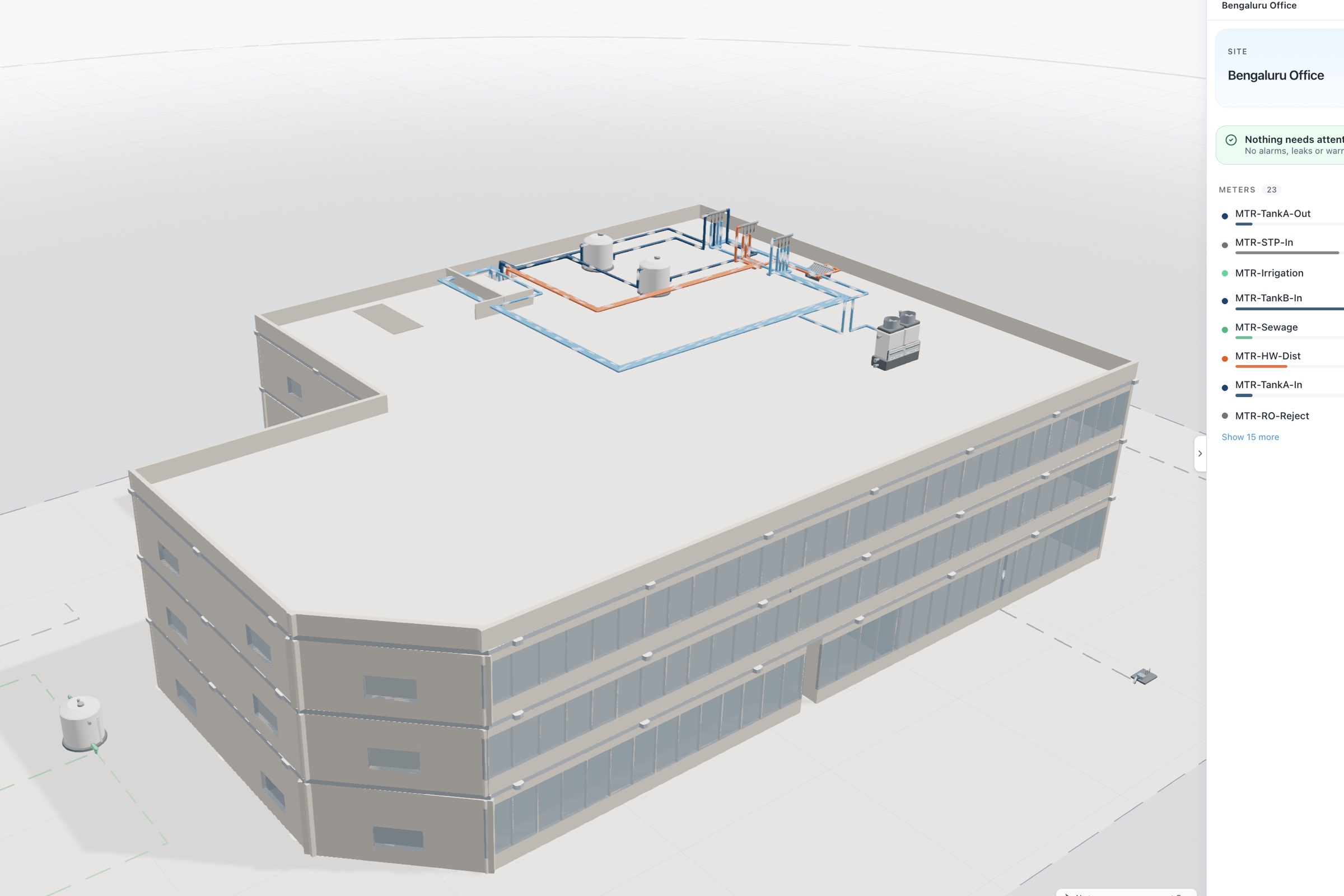
Aqueduct already serves one of India's top hospital chains with 22 hospitals and 9 clinics. aQ Core maps each hospital as sites, floors, zones and devices. aQ EnergySmart meters and baselines each major system against weather, with an electrical digital twin from incomer to feeder, and aQ AirSafe puts CO2 and occupancy beside the air handlers in waiting rooms, offices and staff areas. Upload 6 to 12 months of bills for a day-one baseline, and rate configuration prices every saving.
Hospitals keep their BMS and CMMS. Where control is enabled, with owner approval, Smart Controls acts on approved non-clinical equipment through BACnet or Modbus field devices, with command history kept for every change.
A first engagement usually starts with the central plant and one building. The team walks the plant rooms, reviews 12 months of bills, agrees with infection prevention which spaces are out of scope, and fits clamp-on and wireless metering without entering clinical areas. Findings arrive as CMMS tickets with evidence, and each fix is verified against the baseline before the program extends to further buildings and sites.