The best building management system for universities and schools: one campus, many kinds of building
 Milvian AI teamFacilities and infrastructure intelligence
The best building management system for universities and schools reads every building's controls, whatever their age or maker, and follows the academic calendar. It meters central plant, labs and residence halls separately, keeps classroom air healthy with CO2 and occupancy data, ranks buildings fairly across the campus and supports carbon commitments with verified results, acting only where control is enabled, with owner approval.
Why campuses are a hard case for a BMS
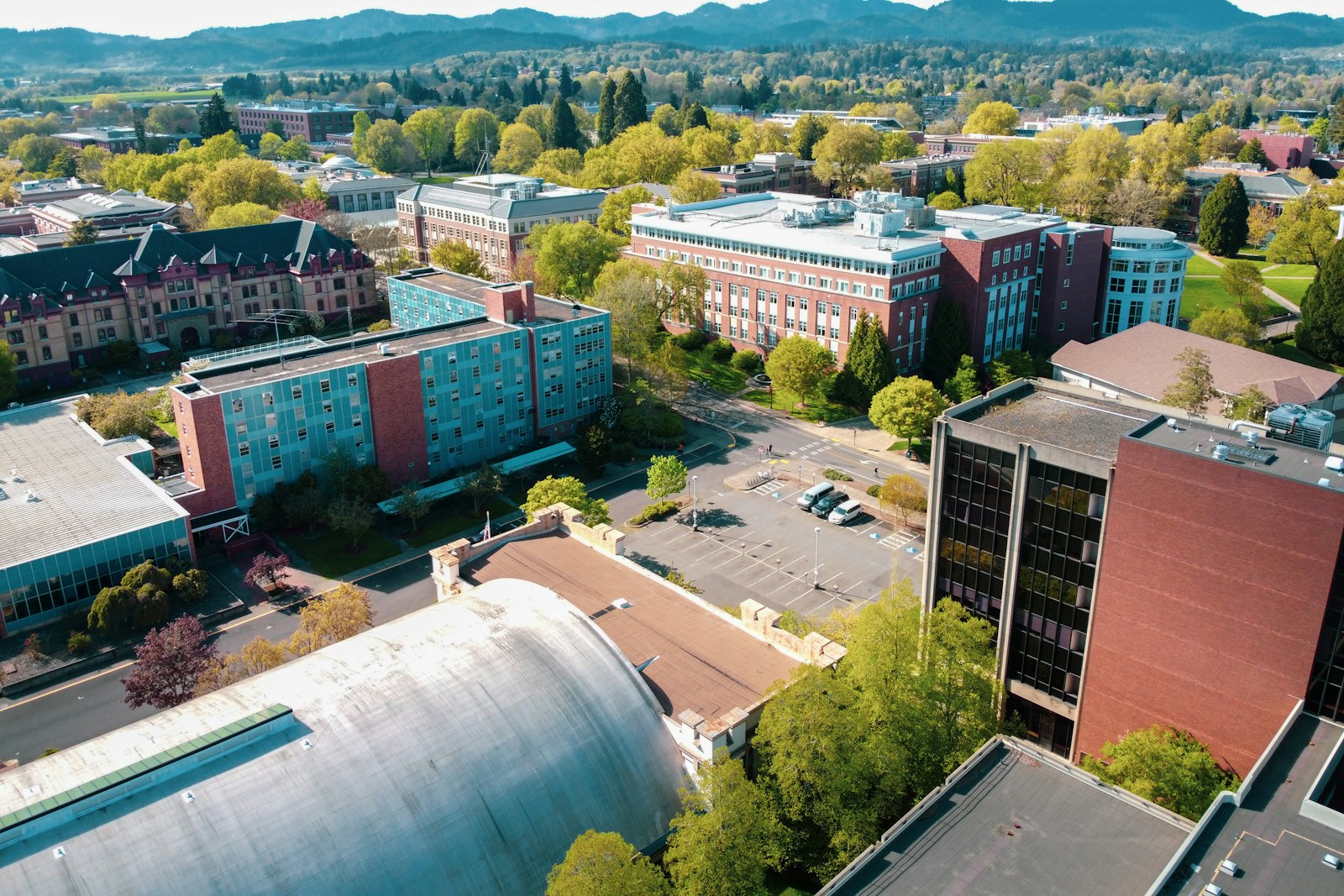
A university campus is a small city with a timetable. It holds research laboratories with fume hoods and strict air change requirements, residence halls that are occupied around the clock in term and empty in summer, libraries open late, sports centers with pools, dining halls with large kitchens, lecture theaters full for an hour and empty the next, and often a central plant distributing steam, hot water or chilled water through tunnels and buried pipes.
Those buildings were built over decades. A typical campus has several controls manufacturers, some pneumatic controls still in service and a few buildings with nothing beyond a thermostat. Each new building arrives with its own BMS front end. The energy manager ends up stitching together trend logs, utility bills and spreadsheets to answer basic questions about where the money goes.
Schools face a smaller version of the same problem with fewer people to solve it. A school district may run dozens of buildings with a handful of facility staff. Classroom air quality has become a priority for parents and boards, and in many schools ventilation has never been measured at all. Budgets are tight, so whatever is bought must show its value clearly.
Both kinds of institution share one more trait: the people in the buildings change every year. Students arrive and leave, departments move, labs are refitted for new research groups. A control strategy written for last year's occupants quietly becomes wrong, and nobody notices until the bills or the complaints arrive.
What the best BMS for universities and schools must do
| Requirement | Why it matters on campus | Question to ask a vendor |
|---|---|---|
| Read many generations of controls | Campuses mix controllers from many makers and decades | Which of our existing systems can you read without replacing them |
| Follow the academic calendar | Term, exams, holidays and summer change everything | Can schedules and baselines follow our calendar rather than a fixed week |
| Meter by building and system | Central plant, labs and residences behave completely differently | Can you meter and baseline each building and major system separately |
| Classroom and lecture hall air quality | CO2 shows whether ventilation matches the people in the room | How do you measure CO2 by room and overlay occupancy |
| Lab ventilation visibility | Labs are often the largest energy users per square foot on campus | How do you see fume hood and lab exhaust energy |
| Fair campus ranking | Buildings differ in size, use and hours | How do you normalize buildings against their own expected use |
| Verified carbon progress | Climate commitments need evidence, not estimates | How do you verify each project's result against a weather-normalized baseline |
| Simple for small teams | School facility teams are stretched thin | Can a non-engineer get an answer without knowing the hardware |
The categories of tools campuses compare
- Traditional BMS per buildingDependable local control. Each building is its own island, and campus-wide analysis is left to the energy manager.
- Campus energy dashboardsGood for public display and student engagement. Usually main meter only, with little diagnosis.
- Standalone IAQ sensor kitsQuick way to see classroom CO2. Readings without a link to ventilation control or energy cost.
- CMMS and work order systemsEssential for maintenance across many buildings. Do not watch equipment.
- Performance contracts and consultantsBring capital and expertise for retrofits. Measurement often ends when the contract period does.
- Facility intelligence platformsOne data layer across every building's controls, meters and sensors, with calendar-aware baselines, air quality and governed control. Needs metering where buildings are blind.
How to evaluate a campus BMS or platform
- Gather bills and the calendarTwelve months of bills per building and the academic calendar give a baseline that understands term and holidays.
- Survey a sample of buildingsInclude a lab building, a residence hall, a classroom block and the central plant.
- Put CO2 sensors in classroomsA few weeks of data shows which rooms are under-ventilated and which are over-ventilated when empty.
- Pilot with a measured targetFor example, residence hall setbacks over a break or lab airflow review, measured against the baseline.
- Roll out building by buildingUse the same metering and reporting design so the campus becomes comparable.
Evaluation scorecard for universities and schools
| Criterion | Weight | What good looks like |
|---|---|---|
| Multi-vendor integration | High | Every building's controls read into one campus model |
| Calendar-aware baselines | High | Weather and academic calendar both accounted for |
| Classroom air quality | High | CO2 and occupancy by room, exposure tracked over time |
| Building-level metering | Medium | Each building and major system metered and ranked |
| Ease of use | Medium | Plain-language answers for small teams |
| Control governance | Medium | Approval, lockouts and command history |
Integration and data
Keep what works. Most campus controllers from recent decades speak BACnet, and plant meters often use Modbus. A platform reads them as they are. For older buildings with pneumatic controls or no controls at all, LoRaWAN meters, sensors and relays add measurement and simple control without cabling through occupied classrooms and residences.
Central plant and district energy systems are often the biggest single opportunity. Metering steam, hot water and chilled water delivered to each building turns a campus-wide utility bill into a cost per building, which is how departments and schools start to own their use. The campus CMMS stays in place and receives findings as tickets.
Compliance and reporting on campus
Many universities report through the AASHE STARS framework and publish climate action plans. Buildings may fall under ENERGY STAR benchmarking, local building performance standards or LEED. For classrooms, ASHRAE 62.1 sets ventilation rates for acceptable indoor air quality, and WELL addresses air in occupied spaces.
A platform supplies measured, building-level evidence for those reports and for boards and parents asking about classroom air. The institution makes the claims.
Where Aqueduct fits
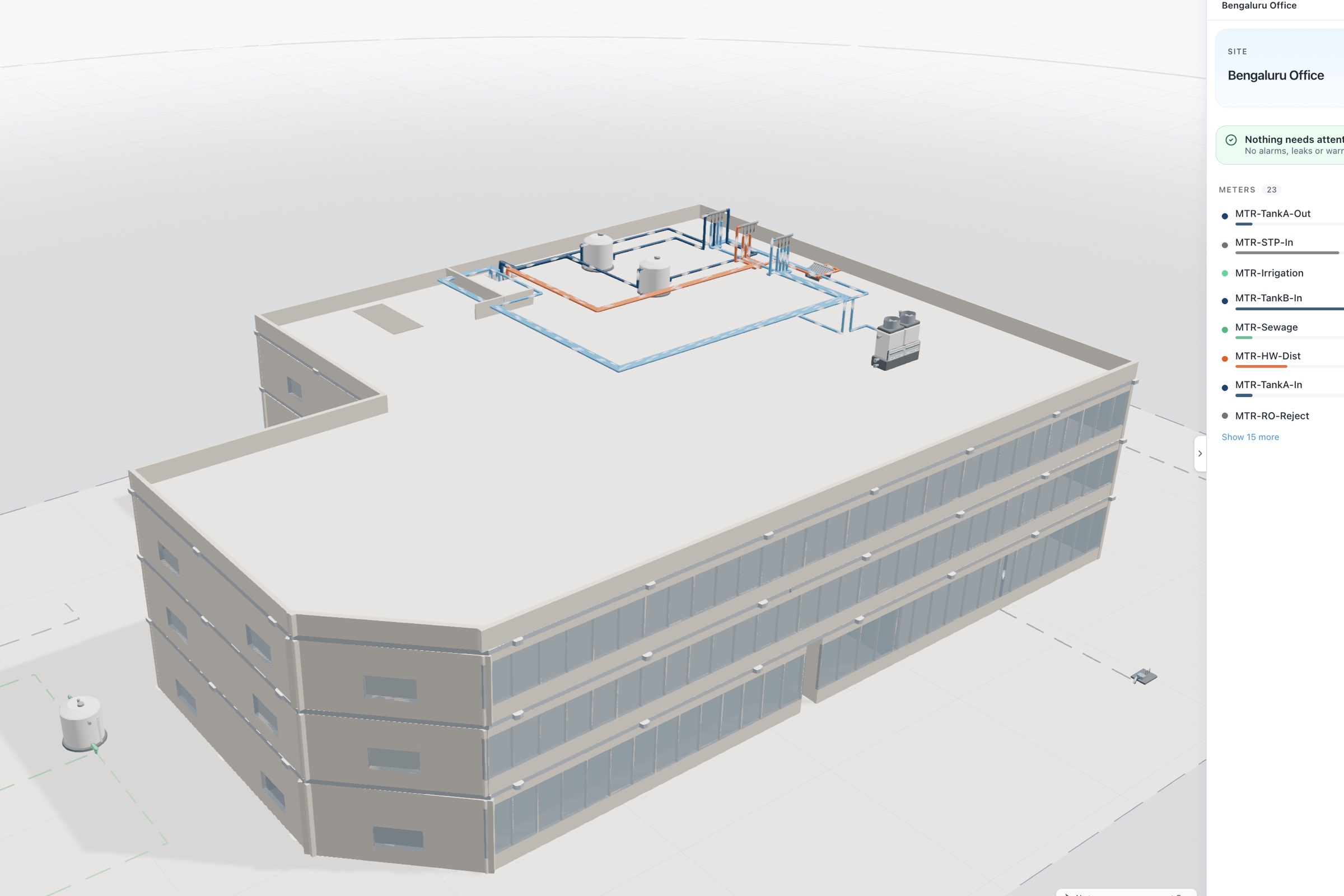
Aqueduct brings every building into one campus model in aQ Core, with real floor plans and zones. aQ EnergySmart baselines each building and the central plant against weather, aQ AirSafe measures CO2, VOCs, particulates, temperature and humidity in classrooms and halls with occupancy overlaid and exposure tracked in zone-hours, and aQ WaterGuard covers residence halls, pools and irrigation.
Occupancy can come from sensors or from a schedule, and drives automation rules in Smart Controls through LoRaWAN relays or Modbus and BACnet field devices, where control is enabled, with owner approval, with lockouts and a command history. aQ Assistant answers questions in plain language, which helps small teams get to an answer without knowing every device.