The best building management system for stadiums: running a venue built for a few hours a week
 Milvian AI teamFacilities and infrastructure intelligence
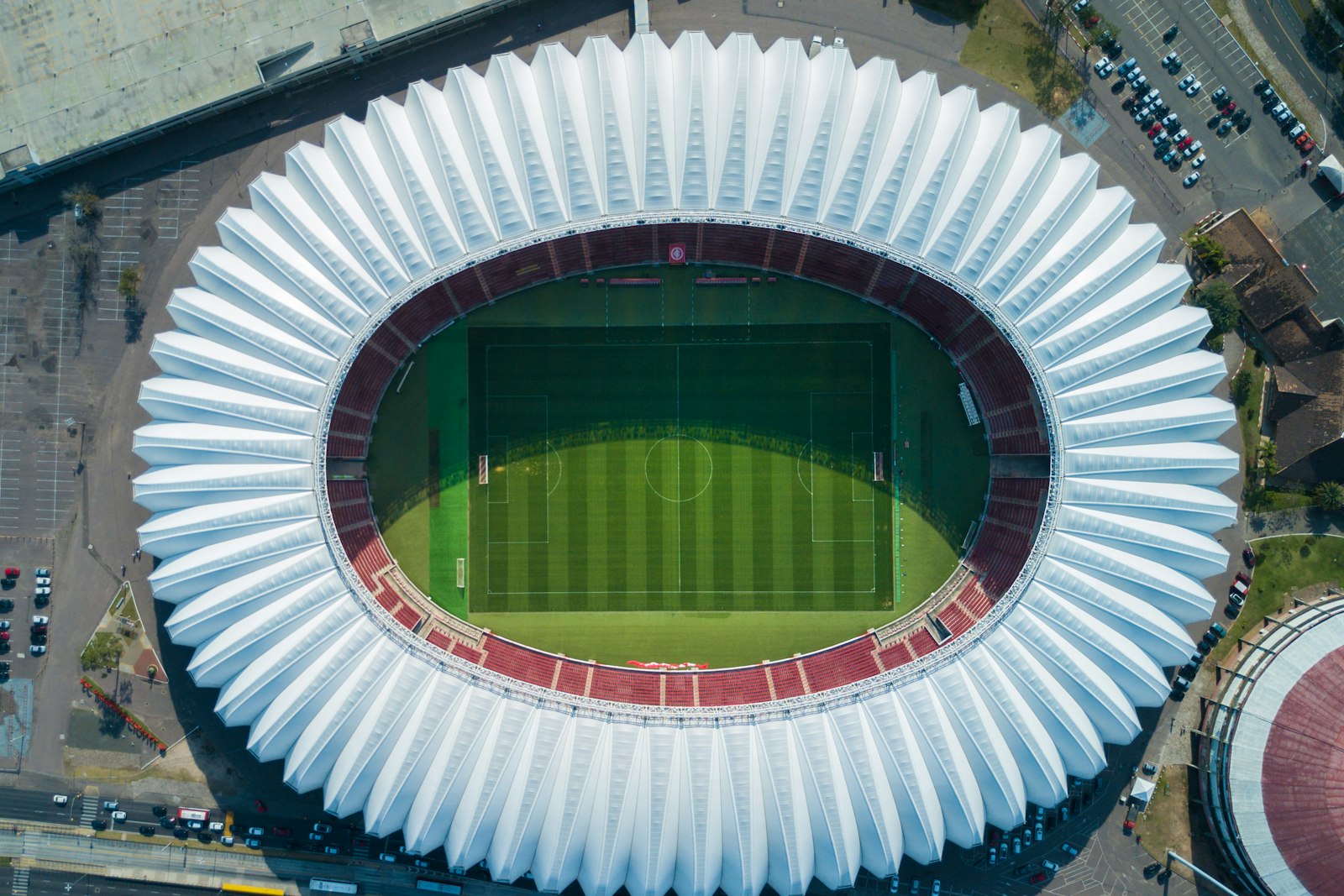
The best building management system for stadiums baselines each kind of day separately, match day, dark day and event setup, and plans start-up so the venue is ready at gate opening without setting a new demand peak. It meters water by stand and irrigation zone, follows crowd air quality, and acts on cooling, lighting and ventilation only where control is enabled, with owner approval.
Why stadiums are a hard case for a BMS
No other building type swings as hard as a stadium. For most of the week it is nearly empty: a groundskeeping crew, an office, some hospitality kitchens on a quiet day. Then, for a few hours, it fills with tens of thousands of people, floodlights, video boards, broadcast compounds, concessions and every restroom running at once.
A traditional BMS handles that with time schedules. Plant starts early to be safe, floodlights warm up longer than the fixture needs and everything switches on together, which sets a demand peak the venue pays for long after the final whistle. On dark days, systems that should be off quietly run, and a failed fill valve on an empty concourse can flow for weeks because nobody is there to hear it.
Stadiums also have systems most buildings lack: pitch irrigation and turf heating, large rainwater or treated water systems in some venues, catering refrigeration that must hold temperature between events, and premium suites that expect hotel-level comfort. A BMS that only knows about air handlers sees a fraction of the venue.
Then there is the calendar. A football season, a concert run, a conference in the hospitality suites and a pitch renovation all change what the building should be using. If the energy and water data is not tied to that calendar, nobody can tell whether a busy month was waste or simply a busy month.
What the best BMS for stadiums must do
| Requirement | Why it matters in stadiums | Question to ask a vendor |
|---|---|---|
| Baselines by day type | A single annual baseline hides everything in a venue that swings this hard | Can you baseline match days, dark days and setup days separately |
| Planned start-up and peak management | One uncoordinated start-up sets a demand charge for months | How do you model the match day load and stagger start-up |
| Feeder and circuit metering | Floodlights, boards and concessions need their own measurement | Which feeders will you meter and how will I see them |
| Dark day leak detection | An empty venue is the clearest leak signal there is | How do you compare night and dark day flow with baseline by zone |
| Irrigation monitoring | Schedules without flow feedback hide stuck zones | Can you check irrigation flow against schedule and weather |
| Crowd air quality | Concourses and suites fill faster than any other space | How do you measure CO2 and comfort by zone during events |
| Refrigeration watch | Concession and kitchen stock must hold temperature between events | How are refrigeration faults alerted on non-event days |
| Governed control | Venue operations cannot risk a system failing on match day | What approval, lockouts and command history come with control |
The categories of tools venues compare
- Traditional BMSReliable control of HVAC plant and some lighting on schedules. Rarely meters by feeder, rarely covers irrigation or water, and does not baseline by event.
- Lighting control systemsSophisticated floodlight and show control. Focused on the fixture, not on its energy cost against the event schedule.
- Energy dashboardsShow main meter use and peaks after the fact. Cannot plan start-up or act on it.
- Irrigation controllersRun zones to schedule, sometimes with weather inputs. Usually no flow feedback to prove what was delivered.
- Venue operations and ticketing platformsExcellent on crowds, staff and events. Usually not connected to the plant room.
- Facility intelligence platformsOne data layer across plant, feeders, water, irrigation and air, with baselines by day type and governed control. Needs the event calendar and some metering.
How to evaluate a stadium BMS or platform
- Collect a season of bills and the event calendarBills plus the calendar let a baseline separate match days from dark days from the start.
- Meter the big feeders and the main water supplyFloodlights, HVAC plant, concessions and boards, plus water by stand and irrigation zone.
- Watch a match day and a dark daySee the start-up sequence, the peak and the night flow before changing anything.
- Pilot one change with a measured resultFor example, a staggered start-up or a dark day plant setback, measured against the right day type.
- Build the venue playbookTurn what worked into schedules and automations for each kind of day.
Evaluation scorecard for stadiums
| Criterion | Weight | What good looks like |
|---|---|---|
| Day type baselining | High | Separate baselines for match, dark and setup days |
| Demand management | High | Match day load modeled and start-up staggered |
| Water and irrigation | High | Flow by stand and zone, dark day leak detection |
| Crowd air quality | Medium | CO2 and comfort by zone, logged per event |
| Control governance | Medium | Approval, lockouts and a command history for every change |
| Integration | Medium | Reads the existing BMS, lighting and irrigation where possible |
Integration and data
Most venues should keep their BMS and read it over BACnet or Modbus. Lighting control and irrigation controllers can often be read too, and where they cannot, metering on their supply shows what they actually did. LoRaWAN meters and sensors suit large, open venues because coverage carries across stands and concourses without new cabling.
The venue's CMMS receives findings as tickets, and the event calendar becomes an input to the baseline rather than a spreadsheet nobody links to energy. Where an older stand's controls are at end of life, replacement can follow the off season.
Concessions and hospitality are often run by a separate operator. Sub-metering their kitchens, bars and refrigeration lets the venue recover utility costs fairly and gives the operator evidence when a fridge or freezer starts to fail between events. The same data shows which concession stands are left powered on dark days.
Compliance and reporting in stadiums
Venues increasingly report sustainability per event to leagues, owners, sponsors and cities. LEED for operations and maintenance, ENERGY STAR benchmarking and building performance standards may apply depending on the location. Water reporting matters in dry climates, and air quality matters for premium spaces and staff areas under ASHRAE 62.1.
A platform supplies measured consumption per event and per day type, which is what a credible sustainability report needs. The venue and its consultants make the claims.
Where Aqueduct fits
Aqueduct takes the event calendar as an input and baselines each kind of day separately. aQ EnergySmart meters feeders and models the match day load, aQ WaterGuard follows water by stand, irrigation zone and source with a live water balance, and aQ AirSafe follows the crowd with CO2 and comfort by zone.
Smart Controls handles pre-cooling, ventilation and dark day setbacks through Modbus and BACnet field devices or LoRaWAN relays, where control is enabled, with owner approval, with lockouts and a command history that shows each command and whether it ran. Aqueduct reads your existing BMS, replaces it where needed or is built into a new venue at design stage.